
Period Care
How to Get Period Blood Out of Clothes Without Setting the Stain
Cold water, the right treatment, and one final check before drying can save most washable clothes from a period stain. Here is the exact order to follow.
Quick answer
What to know
Rinse period blood from the back of the fabric with cold water as soon as possible. Blot instead of scrubbing, apply an enzyme-based stain treatment, let it work, then wash according to the care label. Do not use the dryer until the stain is fully gone because heat can make the remaining mark harder to remove.
A period leak can turn a normal morning into a calculation: Can the stain wait? Is there cold water nearby? What do you do with the underwear if you are not at home?
The stain itself is usually manageable. The order matters more than force. Start cold, work gently, and keep the garment away from heat until you know the mark is gone.
How to remove a fresh period stain from clothes
Fresh blood is easier to lift because it has not dried deeply into the fibers. If you can treat the stain now, do it. Even a quick cold-water rinse buys you a better chance of saving the garment later.
The five-step cold-water method
Check the care label
Confirm that the garment is washable. Silk, wool, dry-clean-only pieces, and specialty fabrics may need a gentler product or professional care.
Rinse from the back
Turn the stained area over and run cold water through the back of the fabric. This helps push blood out in the direction it entered instead of driving it further into the weave.
Blot, do not scrub
Press with a clean white cloth or towel. Scrubbing can spread the stain and stress delicate fibers. Keep moving to a clean section of the cloth as color transfers.
Apply a protein-stain treatment
Use an enzyme-based stain remover or enzyme detergent that is suitable for the fabric. Follow its label and give it the recommended dwell time. Spot test colored or delicate fabric first.
Wash, inspect, then dry
Wash according to the garment label. Inspect the fabric while it is still wet. If any shadow remains, repeat the treatment and air-dry. Do not put it in the dryer yet.
Why cold water is the first move
Blood is a protein-based stain. Heat can make those proteins bind more stubbornly to fabric, which is why a hot rinse or an early trip through the dryer can turn a removable mark into a set stain.
Cold water helps flush away what has not bonded to the fibers. It is not the entire treatment for every stain, but it is the safest first response for most washable everyday fabrics.
How to get dried period blood out of clothes
A dried stain needs more time, not more aggression. Rehydrate it with cold water, apply a suitable enzyme treatment, and allow the formula to work before washing. Older stains may need a second cycle.
For a stain that has already dried
Soak or saturate
Use cold water to soften the dried residue. If the care label allows soaking, leave the stained section submerged for 30 minutes.
Pretreat patiently
Apply an enzyme-based treatment to the stained area. Give a dried stain more dwell time than a fresh one, following the product directions.
Work from the back
Gently massage or blot from the reverse side. Avoid a hard brush unless the fabric can tolerate it.
Wash and repeat if needed
Wash according to the care label, then inspect before drying. A lighter shadow means progress, not permission to add heat. Treat it again.
What should you use on a period stain?
You do not need a chemistry cabinet. You need a treatment that matches the fabric and the age of the stain. Start with the least aggressive option, then escalate only if the garment can handle it.
| Treatment | Best use | Watch for |
|---|---|---|
| Cold water | The first response for fresh blood | Use it before soap, bleach, or heat |
| Enzyme stain remover | Fresh or dried protein stains on compatible washable fabric | Follow the label and spot test first |
| Enzyme laundry detergent | Pretreating and washing washable clothes | Check fabric care instructions |
| 3% hydrogen peroxide | Residual marks on white or confirmed colorfast fabric | It can lighten dyes, so test a hidden area |
| Professional cleaning | Dry-clean-only garments, silk, wool, or valuable pieces | Tell the cleaner what caused the stain |
Does hydrogen peroxide remove period blood?
A 3% hydrogen peroxide solution can help with a lingering blood stain, especially on white fabric. It can also lighten colored fabric. Test a hidden seam first, use a small amount, rinse it out, and stop if the dye changes.
Salt, baking soda, dish soap, and other home remedies appear in many stain guides. Their results vary, and some add unnecessary steps. Cold water plus a fabric-compatible enzyme treatment is a more consistent system for a protein stain.
Adjust the method to the fabric
Cotton underwear, denim, polyester, nylon, and many elastane blends can often tolerate a normal cold-water pretreatment. Delicate and specialty fabrics deserve a slower approach.
- White cotton: cold rinse, enzyme treatment, then a fabric-safe whitening step only if the care label permits it.
- Colored fabric: spot test every treatment and avoid assuming peroxide is color-safe.
- Stretch underwear: avoid aggressive scrubbing, twisting, and high heat that can stress elastic fibers.
- Silk or wool: follow the care label and use a treatment specifically approved for the fiber. When in doubt, use a professional cleaner.
- Dry-clean-only garments: blot with cold water only if the label and fabric allow it, then take the item to a professional promptly.
What if the leak happens away from home?
This is where most advice becomes unrealistic. A sink may solve the stain, but it does not solve privacy, a damp garment, or the hours between the leak and your washing machine.
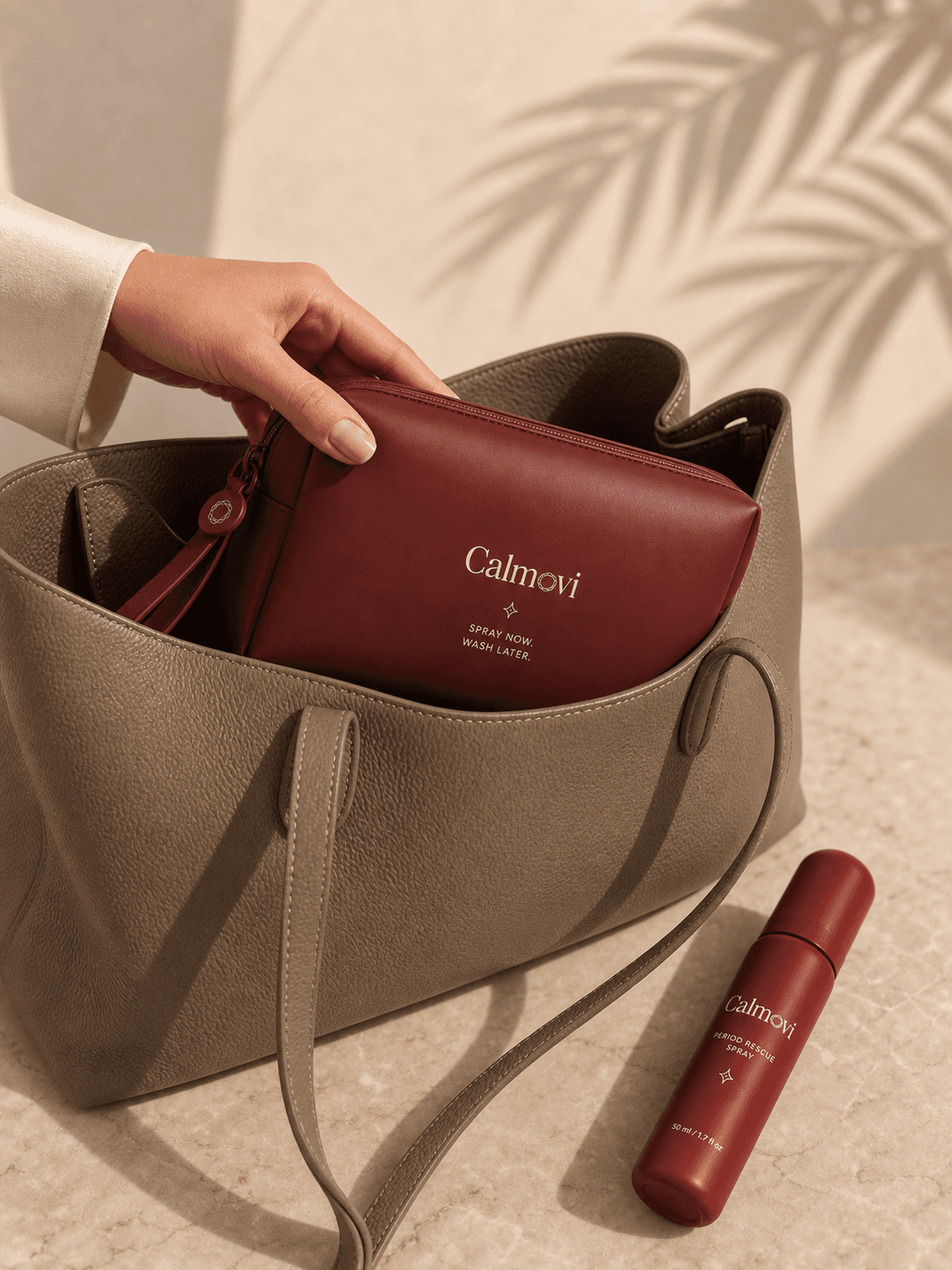
If you have access to cold water, blot or rinse what you can. Avoid rubbing. If you need to change, contain the garment in a waterproof pouch rather than leaving it loose in your bag. Treat it properly as soon as you can.
A purpose-built system removes the improvisation
A bottle under the sink helps at home. It does nothing when a leak happens at work, in a hotel, at school pickup, or halfway through a flight. The useful upgrade is not a stronger chemical. It is having the right treatment and a discreet way to carry the garment in the places where leaks actually happen.
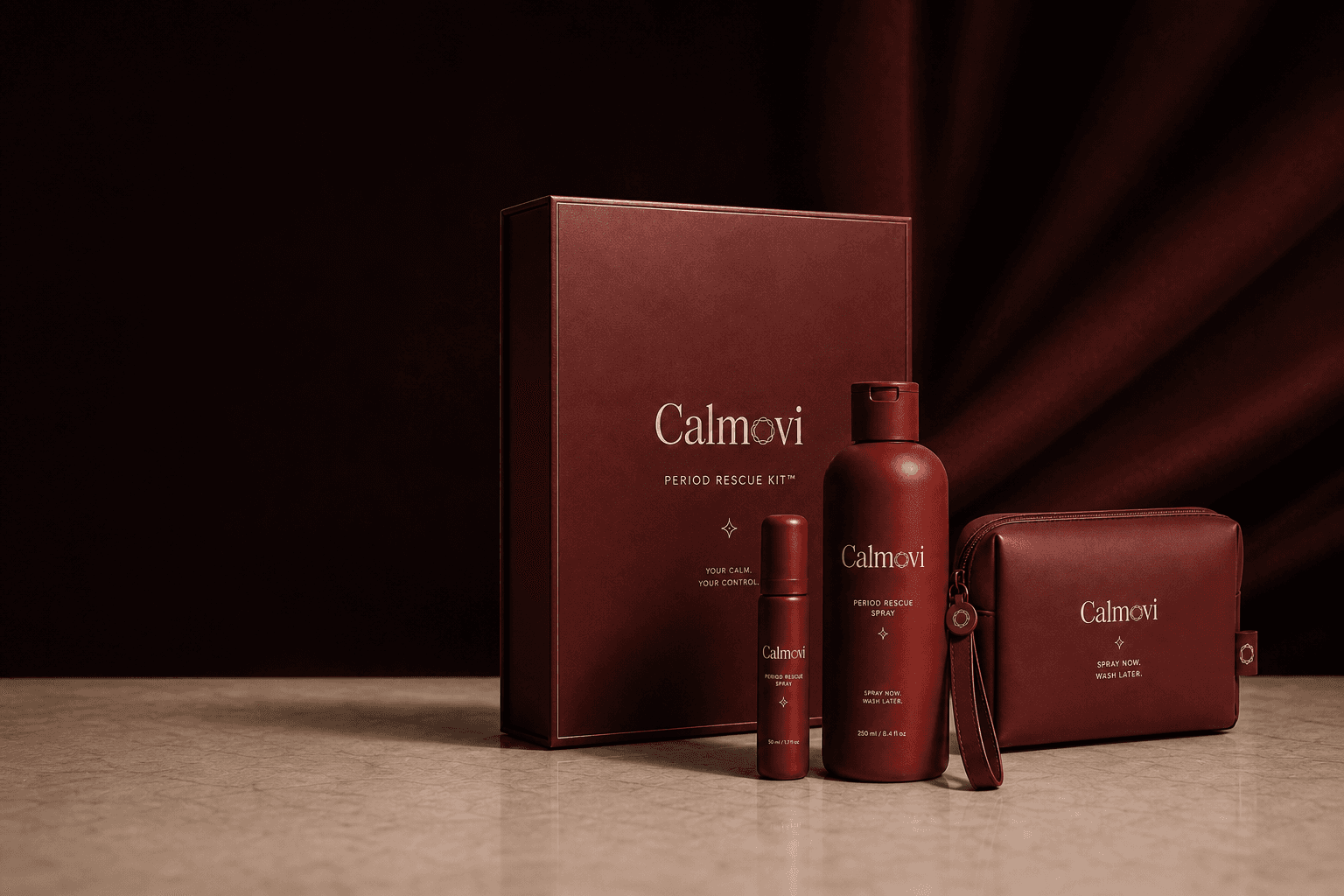
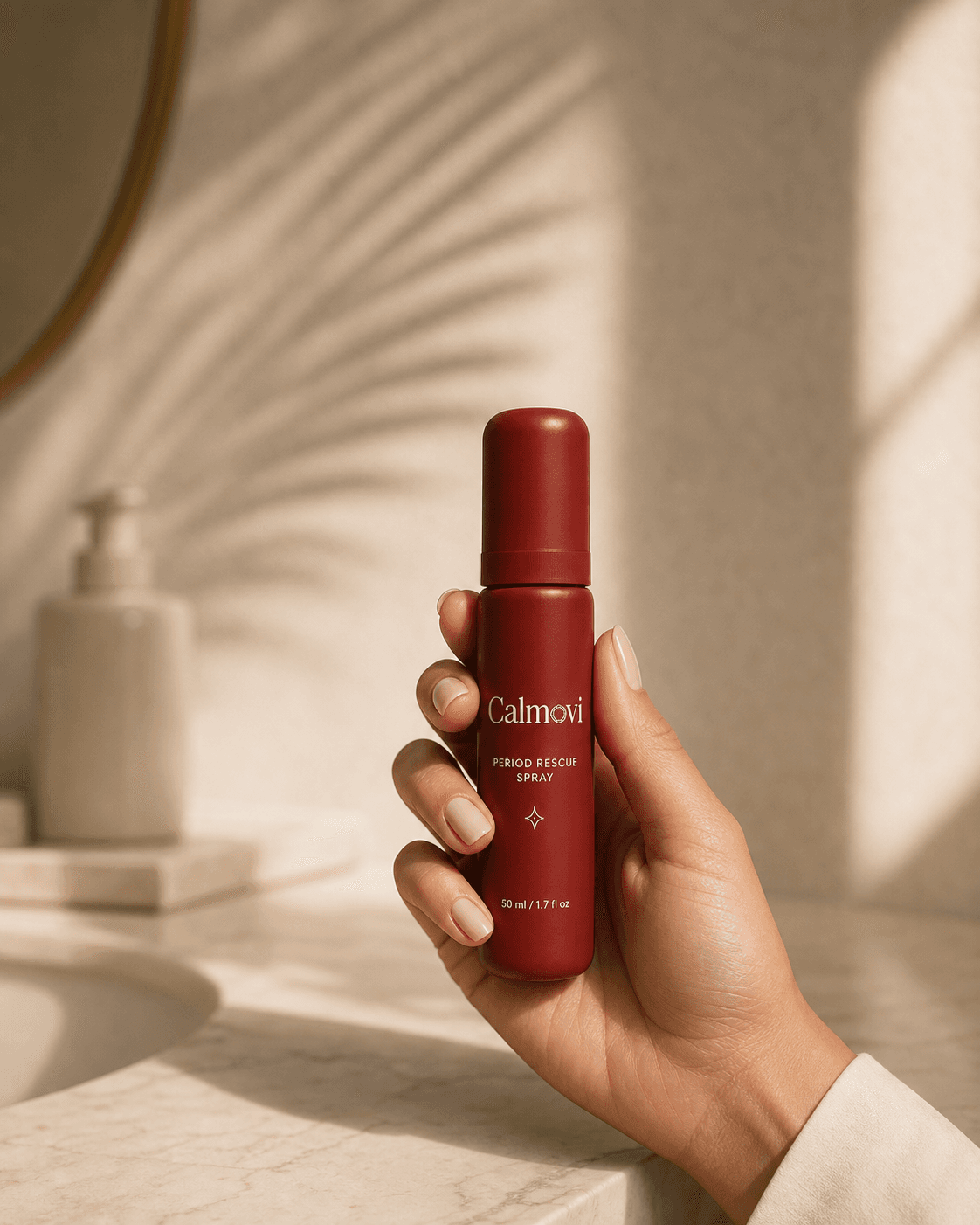
The Calmovi Period Rescue Kit pairs an enzyme-based stain formula with a 250 ml Home Bottle, a refillable 50 ml Purse Spray, and a waterproof wipe-clean pouch. Spray the stain, contain the garment, and finish the wash at home. No improvised plastic bag. No loose damp underwear in your handbag.
Five mistakes that make period stains harder to remove
- Starting with hot water instead of cold water.
- Scrubbing hard enough to spread the stain or damage the fibers.
- Applying peroxide or bleach without checking colorfastness and the care label.
- Mixing cleaning products instead of following one label at a time.
- Putting the garment in the dryer before checking that the stain is fully gone.
The calm response is the effective one. Cold water. A treatment matched to the fabric. Enough dwell time. One careful inspection before heat.
FAQ
Frequently asked questions
Can you get period blood out of clothes after it dries?
Often, yes. Soak or saturate the area with cold water, pretreat it with a fabric-compatible enzyme stain remover, allow extra dwell time, then wash according to the care label. Inspect before drying and repeat if a shadow remains.
Should you use hot or cold water for period blood?
Use cold water first. Hot water can set a protein-based blood stain and make it harder to remove. Follow the garment care label for the later wash cycle, but do not add heat while the stain is still visible.
Does hydrogen peroxide get period blood out of clothes?
A small amount of 3% hydrogen peroxide can help lift a remaining blood mark, especially on white or confirmed colorfast fabric. It can lighten dyes, so test a hidden area first and rinse thoroughly.
Can you remove period stains from colored clothes?
Yes, but spot test the treatment first. Start with cold water and a color-safe enzyme product. Avoid chlorine bleach, and do not assume hydrogen peroxide is safe for every dye.
How do you get period blood out of underwear?
Rinse from the back with cold water, blot gently, pretreat with an enzyme stain remover suitable for the fabric, then wash according to the care label. Keep the underwear out of the dryer until the stain is gone.
How do you remove period blood from bed sheets?
Strip the sheets promptly, flush the stained area with cold water, pretreat with an enzyme product, and wash according to the care label. Check the area before machine drying because heat can set residue that remains.
What should you do with stained underwear away from home?
Blot or rinse with cold water if practical, then place the garment in a waterproof pouch until you can wash it. The Calmovi Period Rescue Kit combines an on-the-go stain spray with a wipe-clean waterproof pouch for this exact situation.
Is the Calmovi Period Rescue Kit only for fresh stains?
No. Calmovi recommends 5 to 10 minutes of dwell time for fresh stains and 15 to 30 minutes for dried stains. Dryer-set marks may need repeat treatment, and results vary by fabric and stain age.
Sources
- Stain Removal Guide — American Cleaning Institute (accessed 2026-08-03)
- Soil and Stain Removers Product Fact Sheet — American Cleaning Institute (accessed 2026-08-03)
- Blood: Stain Solutions — University of Illinois Extension (accessed 2026-08-03)
- General Suggestions for Washable Fabrics — University of Illinois Extension (accessed 2026-08-03)
- Remove Stains From Blood — University of Georgia Extension (accessed 2026-08-03)
- Calmovi Period Rescue Kit — Calmovi (accessed 2026-08-03)